Birthday Cat 3D Layered Paper Cut Embroidery Review
As a designer who spends half my life staring at stitch charts and the other half trying to convince clients that "simple" embroidery is actually quite complex, I approach every new machine embroidery design with a healthy dose of skepticism. We have all seen the trends come and go—oversized logos, overly intricate scenes that turn into muddy blobs after three washes, and designs that look great on screen but fail miserably in the hoop. That is why I took a close look at the Birthday Cat 3D Layered Paper Cut file before committing it to any client projects or my own small shop inventory. This isn't just another generic cat pattern; it is a specific aesthetic choice that demands careful consideration regarding fabric, stability, and finish.
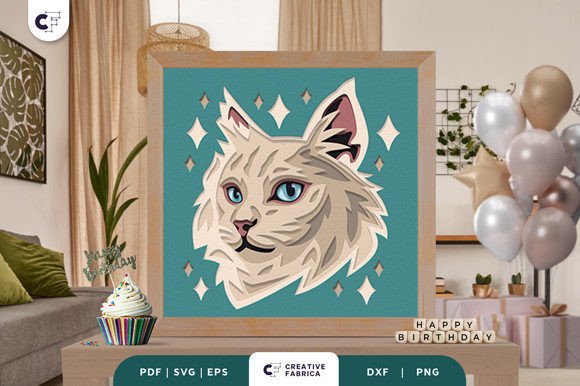
The concept behind this piece is rooted in the popular shadow box style, mimicking the depth of layered paper cut art. For those unfamiliar with the term, a 3D SVG translation into embroidery relies heavily on distinct layers, often using applique techniques or precise satin stitches to create separation between elements. The subject is a Maine Coon, rendered in a way that feels whimsical yet structured. My first impression was not about technical perfection, but about mood. It creates a warm, celebratory atmosphere that feels distinctly handmade. It does not scream "mass-produced factory item." Instead, it whispers "crafted with care," which is exactly what you want when you are targeting the personalized gift market or building a brand identity for a boutique craft business.
Visual Appeal and Design Personality
When evaluating a design like Birthday Cat 3D Layered Paper Cut, the visual hierarchy is everything. The "paper cut" effect suggests clean lines and sharp edges, which translates well to embroidery if executed correctly. In theory, this design uses negative space and overlapping shapes to give the illusion of depth without requiring excessive stitching density. This is a crucial distinction. Many designers mistake complexity for value, but in embroidery, simplicity often yields a more professional result. The Maine Coon theme adds a layer of emotional resonance. Cat lovers are a dedicated demographic, and combining that passion with a birthday theme makes this an ideal candidate for custom apparel or nursery decor.
The layout feels balanced, avoiding the cluttered look that plagues many digital embroidery files. There is a clear focal point—the cat’s face and upper body—with decorative elements that frame rather than distract. This balance is vital for Etsy seller listings where customers scroll quickly. A design that is easy to read from a distance, yet rewarding to inspect up close, tends to convert better. The artistic personality here is playful but tidy. It avoids the chaotic energy of some abstract patterns, making it safe for conservative buyers while still being fun enough for younger audiences.
Real-World Application: From Screen to Stitch
Let us move beyond the screen and talk about how this design performs in real-life scenarios. I recently considered using this for a batch of custom embroidered tote bags for a local pet blogger’s birthday giveaway. The challenge with tote bags is the canvas material, which can be thick and uneven. However, the layered nature of the Birthday Cat 3D Layered Paper Cut design allows it to sit nicely on top of the fabric texture rather than fighting against it. If you use a sturdy stabilizer and perhaps a light tear-away backing, the design holds its shape well.
I also envision this working beautifully on sweatshirt embroidery projects. The heavier knit of a sweatshirt provides a stable surface for the various stitch types involved. Whether you are creating a holiday embroidery gift or a year-round keepsake, the design’s versatility shines here. It is equally effective as a baby embroidery piece on a onesie or a blanket, provided you adjust the scale appropriately. The softness associated with baby items pairs well with the gentle curves of the paper-cut style. Furthermore, for commercial embroidery purposes, such as branded merchandise for a pet store, this design offers high recognition value. It is distinctive enough to stand out on a rack of generic goods.
Another strong use case is the embroidered patch. By adding a border, this design could easily become a detachable accessory for denim jackets or backpacks. The layered look gives the patch dimension, making it feel premium. Customers are willing to pay more for items that look expensive, even if they are relatively simple to produce. The key is in the execution of the applique design elements. If the base layers are smooth and the top details are crisp, the final product will exude quality.
Where to Use Caution
No design is perfect for every situation, and Birthday Cat 3D Layered Paper Cut is no exception. There are specific contexts where this design might struggle. First, avoid placing this on curved surfaces like caps unless you have significant experience with cap hoops. The layered elements may distort if the tension is not perfectly calibrated. Similarly, thin fabrics like silk or lightweight rayon require extra caution. Without proper support, the weight of the threads could cause puckering, ruining the clean lines of the paper-cut aesthetic.
Textured fabrics are another potential pitfall. While the design looks good on smooth cotton or canvas, rough weaves can obscure the finer details. If you are working with a chunky knit or a heavy tweed, the small details might get lost. In these cases, you might need to simplify the design or increase the size to ensure clarity. Additionally, dark fabrics require careful thread selection. The contrast between the background and the lighter layers of the design must be sufficient to maintain the illusion of depth. If the colors blend too much, the 3D effect collapses into a flat, confusing shape.
Small hoop sizes are also a limitation. Trying to cram this design into a tiny hoop will force you to reduce the scale, which eliminates the very details that make the design special. The "paper cut" style relies on visible separation between layers. If those layers merge due to scaling down, the design loses its charm. Therefore, always confirm the hoop size requirements before starting production. If the design requires a large hoop, consider whether your target product can accommodate it without looking oversized.
Practical Designer Notes for Success
To get the most out of this file, I recommend a few practical steps before you commit to a full run. First, test the design on scrap fabric that matches your final product in weight and texture. This helps you identify any potential issues with thread colors or stitch density early on. Pay close attention to the transition points between different stitch types, such as where satin stitch meets fill stitch or running stitch. These areas are prone to thread breaks or tangling if not optimized.
Inspect the small details closely. Are there any tiny elements that might not stitch out cleanly? If so, you may need to adjust the digitizing settings or remove those elements entirely. Testing in black and white mockups can also help you evaluate the contrast and composition without being distracted by color. Compare how the design looks on both light and dark backgrounds to ensure it remains versatile. Finally, always check the licensing terms. Even if you are selling finished products, you need to know if you have the right to use the digital file commercially. Confirming these details upfront protects your small shop product business from legal issues.
In conclusion, the Birthday Cat 3D Layered Paper Cut is a strong contender for anyone looking to add a touch of whimsical elegance to their embroidery portfolio. It balances artistic appeal with practical usability, making it suitable for a wide range of products, from tote bag design projects to delicate apron embroidery. By paying attention to fabric choice, stabilizer usage, and hoop limitations, you can transform this digital asset into a stunning finished product that delights customers and builds trust in your brand. It is a reminder that in embroidery, the best designs are not just about the image, but about how well it translates to the needle and thread.