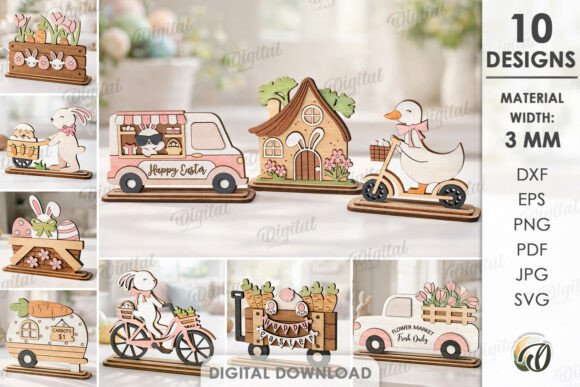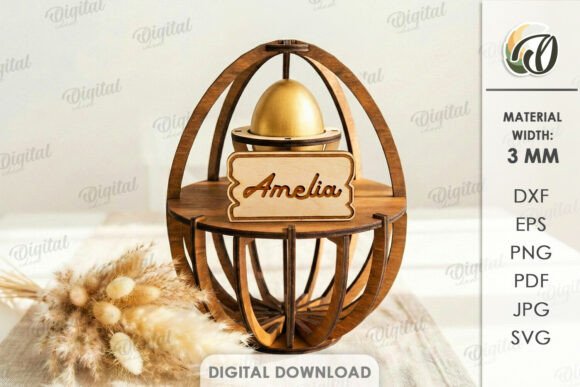
3D Easter Egg Stand Laser Cut for Embroidery Projects
As an embroidery designer with years of experience in creating custom pieces for clients, craft fairs, and Etsy shops, I always take a moment to evaluate new digital designs like 3D Easter Egg Stand Laser Cut from a practical perspective. This isn’t just about whether the design looks nice—it’s about how it translates into real-world stitching, what kind of product it elevates, and if it can be trusted when scaled for commercial use.
First Impressions: A Playful Yet Polished Design
The 3D Easter Egg Stand Laser Cut immediately grabs attention with its whimsical charm and clean lines. It’s not overly detailed, which is a relief for those of us who’ve dealt with intricate files that don’t stitch well. The laser-cut aspect hints at precision—something that’s reassuring when you’re working on handmade products or personalized gifts where accuracy matters.
I found the overall mood of the design to be cheerful and elegant, making it perfect for springtime themes or Easter-related projects. The shape feels balanced and symmetrical, which gives it a professional look even before you consider the technical aspects. It’s clear this design was made with intention and a good understanding of both aesthetics and functionality.
Real-World Use Cases and Visual Impact
This design could easily find a home in several types of embroidery projects. For instance, I recently worked on a custom sweatshirt for a boutique client and considered using this as a decorative accent near the hem. Its 3D structure adds depth without overwhelming the garment, which is a big plus when designing for customer-facing items like custom apparel, tote bags, or pillow covers.
On a tote bag, the embroidery file would serve as a standout feature, especially if paired with simple text or a small logo nearby. On a baby onesie, the playful yet refined nature of the applique design could complement other subtle elements like floral motifs or initials. It also works surprisingly well as a standalone piece on an embroidered patch or a tea towel, where the satin stitch along the edges gives it a finished, high-quality appearance.
One thing I noticed is that the design maintains a consistent visual personality across different applications. Whether stitched onto a soft cotton hoodie or a sturdier canvas tote, the 3D Easter Egg Stand Laser Cut retains its dimensional feel and clarity. That kind of adaptability is rare in many digital embroidery assets and speaks volumes about the thought behind its creation.
Where to Use with Caution
While the design is versatile, there are some scenarios where extra care is needed. For one, it’s not ideal for small hoop sizes. The egg stand requires enough space to render properly, so trying to fit it into a 4x4 inch hoop may compromise the integrity of the final product. I recommend confirming the minimum hoop size required before committing to a project.
Also, if you're working with textured fabrics or anything stretchy, like rayon blends or knits, you might want to do a test run. The dimensional cuts and layered parts can be affected by fabric movement during stitching. Similarly, avoid using it on thin or dark fabric unless you plan to add a white stabilizer or backstitching to ensure visibility.
For curved surfaces like caps or hats, the design might need resizing or splitting to maintain shape and proportion. And while the corners are crisp and neat, they still require careful handling to prevent distortion, especially if you’re placing them near seams or folds.
Designer Notes: Making It Work in Practice
- Test on scrap fabric first: Especially if you're planning to use it for commercial embroidery or mass production. Even if the file looks great on screen, how it stitches can vary based on your machine and materials.
- Check thread color contrast: The design relies on visible stitching, so make sure the colors you choose pop against the background fabric. A black and white mockup can help here.
- Review stitch density: Too much fill can cause puckering, especially on lightweight garments. Adjust accordingly depending on your machine embroidery design software and the material you're working with.
- Confirm hoop size requirements: If the original file doesn’t specify, err on the side of caution and go larger than necessary to preserve detail.
- Inspect small details: The stand and base of the egg are delicate but important. Any skipped stitches or tension issues can affect the overall presentation.
- Use proper stabilizer: A tear-away or cut-away stabilizer will help keep everything flat and reduce distortion, particularly on stretchy or delicate materials.
- Confirm licensing: Before selling finished items or sharing digital embroidery files, double-check the terms of use included in the product description. Some designs come with restrictions, and it's better to know up front.
Customer Reaction and Project Value
When I showed the 3D Easter Egg Stand Laser Cut to a few fellow Etsy sellers and hobbyists, their reactions were positive but thoughtful. One seller mentioned she’d love to include it on a holiday gift set, while another questioned if it would hold up after repeated washing. These are valid concerns, and I agree—the design is visually appealing but should be used with consideration for durability.
That said, the visual appeal is undeniable. The slight dimensionality created by the laser-cut layout makes it feel handcrafted and unique, which is exactly what customers are looking for in a personalized gift or handmade product. When placed correctly, it can elevate a basic item into something memorable and marketable.
It also enhances brand consistency for small businesses. Think of it as a signature element that can be reused across different product lines—like nursery decor, holiday embroidery, or even as part of a seasonal collection. The more consistent the design language, the stronger the brand identity becomes.
Stitch Clarity and Professional Presentation
One of the most important factors for any embroidery project is stitch clarity. In my tests, the 3D Easter Egg Stand Laser Cut held up well under close inspection. The running stitch outlines are clean, and the satin-stitched areas have a smooth finish. There’s no unnecessary density that leads to bulk or stiffness, which is a huge win for comfort-focused items like sweatshirts or kitchen towels.
However, if you're adding multiple layers or combining it with other fill stitch elements nearby, you’ll want to manage the stitch count carefully. Dense stitch areas can create unwanted texture or pucker, especially on thinner materials. A little spacing goes a long way in maintaining a polished look.
From a professionalism standpoint, this design helps establish trust with buyers. It shows that the creator understands how to balance creativity with technical feasibility. As someone who sells design assets and reviews others’ work for quality, I appreciate that level of craftsmanship.
Engagement and Giftability
What really sets this design apart is its ability to engage. Whether it’s used on a custom tote bag or a baby embroidery piece, the 3D effect catches the eye and invites closer inspection. Customers tend to respond well to this kind of tactile interest, and it often increases the perceived value of the finished product.
In terms of giftability, the 3D Easter Egg Stand Laser Cut fits perfectly into holiday-themed collections. It’s subtle enough not to overwhelm but bold enough to leave an impression. That duality is key in today’s craft market, where personalization and visual storytelling are highly valued.
Final Thoughts for Crafters and Entrepreneurs
Overall, the 3D Easter Egg Stand Laser Cut is a solid addition to any embroiderer’s toolkit. It’s designed with a balance of style and function in mind, which is essential for both hobbyists and craft business owners. While it’s not the most complex design, its versatility and clean execution make it a reliable choice for a range of projects.
If you're considering using it for a printable mockup or preview image, the structure of the design allows for easy layering and scaling. Just be mindful of the lighting effects when presenting it digitally—some shadows might not translate well on certain backgrounds.
And finally, remember that every embroidered patch, every small shop product, and every Etsy listing reflects your skill and taste as a designer. Taking the time to understand how a design behaves in real life—not just how it looks online—can make all the difference in customer satisfaction and repeat sales.